How Connectivity Is Reshaping the
Future of Destination Hospitality in India
And how India's next great hospitality corridors are already forming
21/05/2026
And how India's next great hospitality corridors are already forming
21/05/2026
For decades, the success of travel destinations in India was shaped largely by geography. The most valuable locations were those already positioned within established urban centres, commercial hubs, or globally recognised leisure circuits. Accessibility determined viability, while regions with strong natural potential but weaker connectivity remained largely outside organised hospitality growth.
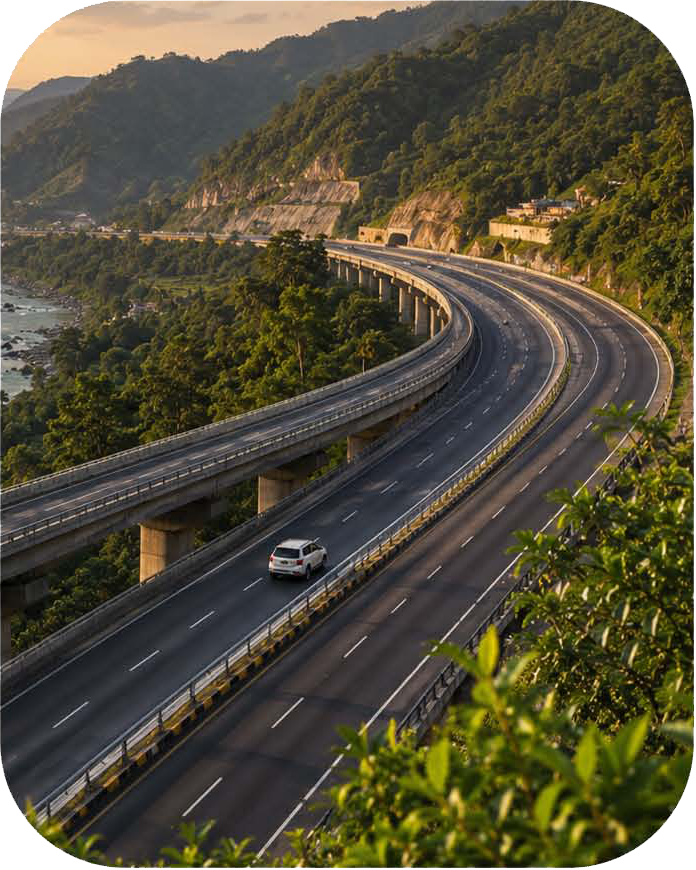
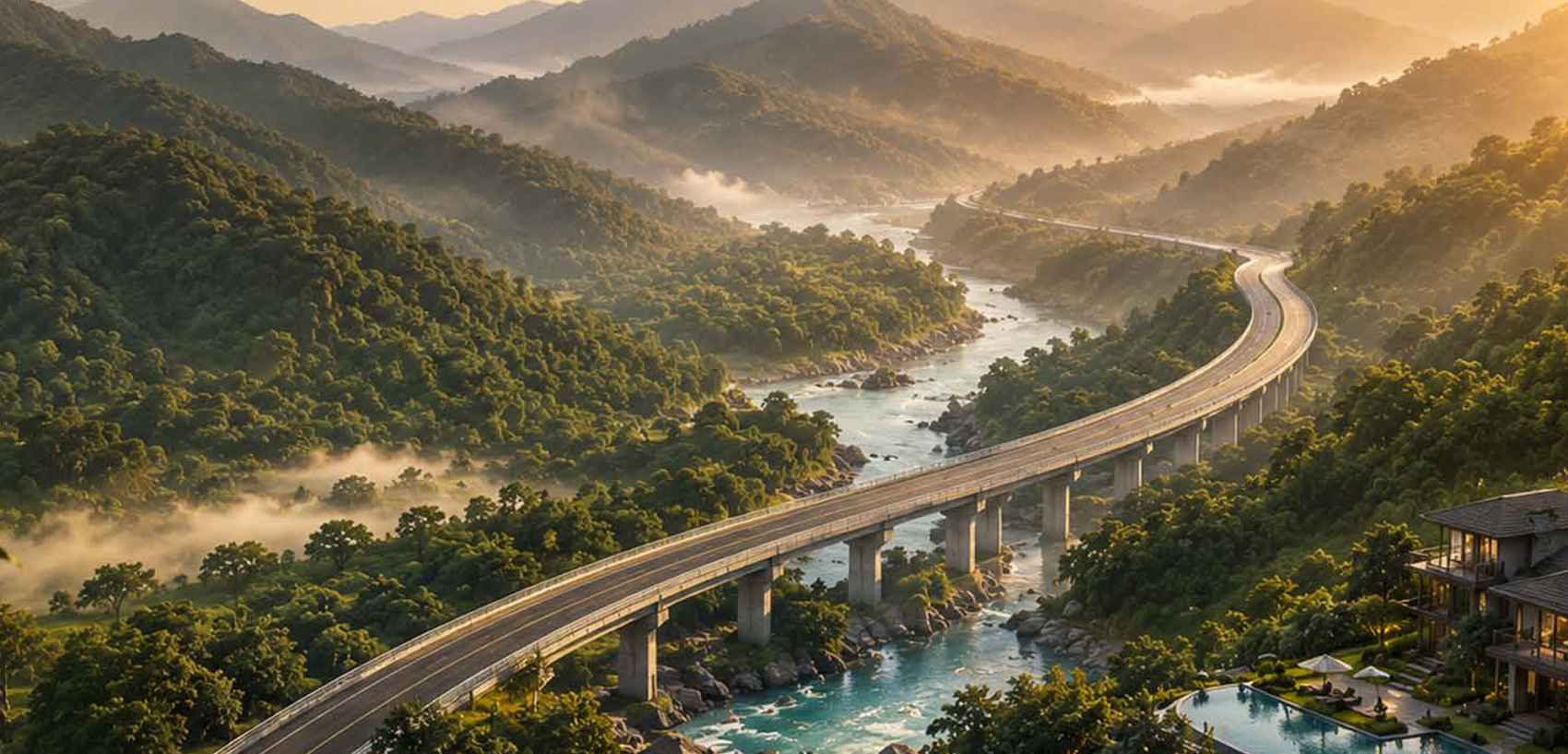
That equation is now beginning to change. Across India, large-scale infrastructure projects are quietly reshaping how people move across the country. The Delhi–Dehradun Expressway is cutting travel time from Delhi to the Himalayan foothills from 6.5 hours to 2.5. The Rishikesh–Karnaprayag Railway, expected to be completed by December 2026, will reduce travel time deeper into the Himalayan corridor from 7 hours to under 2. Jolly Grant Airport in Dehradun, is offering connectivity to cities such as Mumbai, Bengaluru,and Chennai, and is opening the region to travellers for whom the road was never an option.
What emerges from this transformation is not simply improved transportation, but the creation of entirely new growth corridors, changing how travellers move,where they choose to spend time, and which destinations begin attracting sustained hospitality demand.
When journey times fall significantly, the psychology of a destination shifts entirely. A six-hour drive is a commitment. A two-hour drive is a weekend option. A destination that once required a dedicated long holiday is now viable for a long weekend. Repeat visits become feasible. Spontaneous bookings replace heavily planned itineraries.
This behavioural shift has measurable consequences for hospitality economics. Catchment areas expand, and a destination that once drew from a 100-kilometre radius may now pull effectively from 300 kilometres. Average booking windows compress as spontaneity increases. Occupancy patterns stabilise as visitation diversifies across seasons and traveller types.

Historically, many nature-led destinations remained constrained not by lack of appeal, but by limited infrastructure. Strong landscapes alone were insufficient to support sustained hospitality growth at scale. But when connectivity improves, the economics of these regions begin changing.
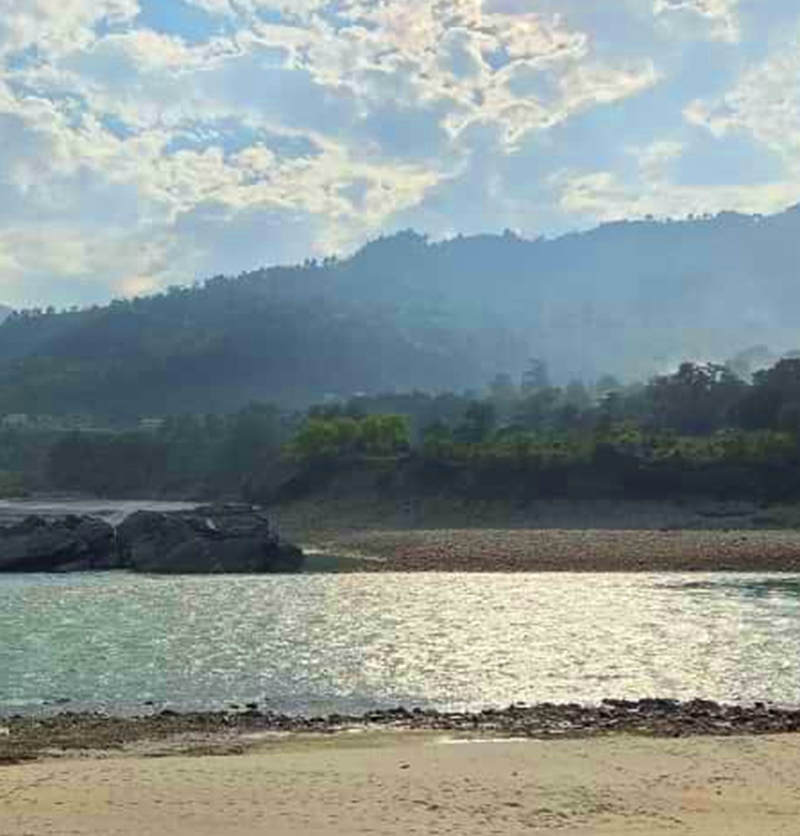
This is particularly relevant when considering destinations like the Srinagar–Alaknanda corridor in Uttarakhand — positioned at the sacred confluence of the Alaknanda and Bhagirathi rivers, within 30 km of Mussoorie, 50 km of Rishikesh, and 63 km of Haridwar. A region of rare geographic and spiritual significance that, until recently, sat just beyond comfortable weekend range of its primary catchment.
As the Rishikesh–Karnaprayag Railway reshapes that calculus, the region moves from pass-through to destination — and the conditions for longer-stay, experience-oriented hospitality begin to take hold. Infrastructure here is not just transportation. It is an economic catalyst. It unlocks destinations that already possess environmental, cultural, and experiential value but lacked the accessibility required to support long-term hospitality demand.

Increasingly, travellers are seeking destinations that offer environmental immersion, slower pacing, and a stronger sense of place. The rise of wellness-led hospitality, nature-oriented stays, and experience-driven travel reflects a broader shift away from purely convenience-led tourism toward destinations that offer depth, restoration, and differentiated experiences. India's wellness tourism market is projected to grow to over $35 billion by 2030, and the most sought-after product in this segment is not urban spa hotels. It is nature-integrated retreats in settings that carry genuine spiritual and environmental resonance.
This is precisely what infrastructure-driven growth corridors make viable. They combine improving accessibility with changing travel behaviour and create the conditions for entirely new hospitality ecosystems to emerge. The long-term value of such regions is shaped not only by where they stand today, but by how connectivity, tourism demand, and destination relevance evolve together over the next decade.
Within this context, projects like Devagya Sunscape begin to take shape not as standalone hospitality developments but as part of a larger structural shift in how India's next destination corridors are taking shape. Because increasingly, the future of hospitality growth belongs to regions where infrastructure, landscape, and evolving travel behaviour converge to create entirely new destination economies and to the projects that are positioned there before the rest of the market arrives.


Devagya registered office:
Devagya Sunscape Pvt LTD. 48 Pleasant Valley, Rajpur Rd, Dehradun, Uttarakhand, India
Registered office US office:
Janhvi Enterprise LLC 3831 Marsh, Garnet Valley, PA, US 19060